


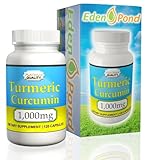





Charts
Trait Correlation Between Curcumin by Eden Pond Intake and Overall Mood
Curcumin By Eden Pond Charts
Daily Distribution
Average by Day of Week
Average by Month
Average by Year
Overall Mood Charts
Daily Distribution
Average by Day of Week
Average by Month
Average by Year
Relationship Charts
Overall Mood Following Curcumin by Eden Pond
Correlation Between Curcumin by Eden Pond and Overall Mood by Duration of Action
Correlation Between Curcumin by Eden Pond and Overall Mood by Onset Delay
Average Curcumin by Eden Pond Intake Preceding Overall Mood
Average Overall Mood by Previous Curcumin by Eden Pond Intake

Abstract
Overall Mood was generally 0% higher than average after a total of 2000 milligrams of Curcumin By Eden Pond over the previous 21 days.
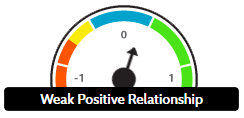
Aggregated data from 1 study participants suggests with a HIGH degree of confidence (p=0.174, 95% CI 0.008 to 0.074) that Curcumin By Eden Pond has a very weakly positive predictive relationship (R=0.041) with Overall Mood.
The highest quartile of Overall Mood measurements were observed following an average 246 milligrams Curcumin By Eden Pond per day.
The lowest quartile of Overall Mood measurements were observed following an average 192 milligrams of Curcumin By Eden Pond per day.
After an onset delay of 30 minutes, Overall Mood is typically 0% lower than average over the 21 days following around 192 milligrams Curcumin By Eden Pond.

Objective

Participant Instructions
Manual Recording Option
 Create a reminder for Curcumin by Eden Pond here
and record it daily by enabling notifications or using
Create a reminder for Curcumin by Eden Pond here
and record it daily by enabling notifications or using
 the reminder inbox here
.
the reminder inbox here
.
Manual Recording Option
 Create a reminder for Overall Mood here
and record it daily by enabling notifications or using
the reminder inbox here
.
Create a reminder for Overall Mood here
and record it daily by enabling notifications or using
the reminder inbox here
.

Design
This study is based on data donated by 1 participants. Thus, the study design is equivalent to the aggregation of 1 separate n=1 observational natural experiments.
Data Analysis
Curcumin by Eden Pond Pre-Processing
Curcumin by Eden Pond measurement values below 0 milligrams were assumed erroneous and removed. No maximum allowed measurement value was defined for Curcumin by Eden Pond. It was assumed that any gaps in Curcumin by Eden Pond data were unrecorded 0 milligrams measurement values.
Overall Mood Pre-Processing
Overall Mood measurement values below 1 out of 5 were assumed erroneous and removed. Overall Mood measurement values above 5 out of 5 were assumed erroneous and removed. No missing data filling value was defined for Overall Mood so any gaps in data were just not analyzed instead of assuming zero values for those times.
Predictive Analytics
It was assumed that 30 minutes would pass before a change in Curcumin By Eden Pond would produce an observable change in Overall Mood.
It was assumed that Curcumin By Eden Pond could produce an observable change in Overall Mood for as much as 21 days after the stimulus event.

Statistical Significance
Using a two-tailed t-test with alpha = 0.05, it was determined that the change in Overall Mood is not statistically significant at a 95% confidence interval. This suggests that the Curcumin By Eden Pond value does not have a significant influence on the Overall Mood value.
After treatment, a 0.9% decrease (0.0258 out of 5) from the mean baseline 2.86 out of 5 was observed. The relative standard deviation at baseline was 11.6%. The observed change was 0.0777165 times the standard deviation.
A common rule of thumb considers a change greater than twice the baseline standard deviation on two separate pre-post experiments may be considered significant. This occurrence would have only a 5% likelihood of resulting from random fluctuation (a p-value < 0.05).

Data Sources
Curcumin By Eden Pond data was primarily collected using QuantiModo. QuantiModo allows you to easily track mood, symptoms, or any outcome you want to optimize in a fraction of a second. You can also import your data from over 30 other apps and devices. QuantiModo then analyzes your data to identify which hidden factors are most likely to be influencing your mood or symptoms.
Overall Mood data was primarily collected using QuantiModo. QuantiModo allows you to easily track mood, symptoms, or any outcome you want to optimize in a fraction of a second. You can also import your data from over 30 other apps and devices. QuantiModo then analyzes your data to identify which hidden factors are most likely to be influencing your mood or symptoms.

Limitations
As with any human experiment, it was impossible to control for all potentially confounding variables. Correlation does not necessarily imply causation. We can never know for sure if one factor is definitely the cause of an outcome. However, lack of correlation definitely implies the lack of a causal relationship. Hence, we can with great confidence rule out non-existent relationships. For instance, if we discover no relationship between mood and an antidepressant this information is just as or even more valuable than the discovery that there is a relationship.
We can also take advantage of several characteristics of time series data from many subjects to infer the likelihood of a causal relationship if we do find a correlational relationship. The criteria for causation are a group of minimal conditions necessary to provide adequate evidence of a causal relationship between an incidence and a possible consequence.
Criteria For Causal Inference
Strength (A.K.A. Effect Size)
A small association does not mean that there is not a causal effect, though the larger the association, the more likely that it is causal. There is a very weakly positive (R = 0.041) relationship between Curcumin By Eden Pond Intake and Overall Mood.
Consistency (A.K.A. Reproducibility)
Consistent findings observed by different persons in different places with different samples strengthens the likelihood of an effect. Furthermore, in accordance with the law of large numbers (LLN), the predictive power and accuracy of these results will continually grow over time. 917 paired data points were used in this analysis. Assuming that the relationship is merely coincidental, as the participant independently modifies their Curcumin By Eden Pond Intake values, the observed strength of the relationship will decline until it is below the threshold of significance. To it another way, in the case that we do find a spurious correlation, suggesting that banana intake improves mood for instance, one will likely increase their banana intake. Due to the fact that this correlation is spurious, it is unlikely that you will see a continued and persistent corresponding increase in mood. So over time, the spurious correlation will naturally dissipate.
Specificity
Causation is likely if a very specific population at a specific site and disease with no other likely explanation. The more specific an association between a factor and an effect is, the bigger the probability of a causal relationship.
Temporality
The effect has to occur after the cause (and if there is an expected delay between the cause and expected effect, then the effect must occur after that delay). The confidence in a causal relationship is bolstered by the fact that time-precedence was taken into account in all calculations.
Biological Gradient
Greater exposure should generally lead to greater incidence of the effect. However, in some cases, the mere presence of the factor can trigger the effect. In other cases, an inverse proportion is observed: greater exposure leads to lower incidence.
Plausibility
A plausible bio-chemical mechanism between cause and effect is critical. This is where human brains excel.
Based on our responses so far,
0 humans feel that there is a plausible mechanism of action for a relationship between Curcumin By Eden Pond Intake and Overall Mood.
0 humans feel that any relationship observed between Curcumin By Eden Pond Intake and Overall Mood is coincidental.
Coherence
Coherence between epidemiological and laboratory findings increases the likelihood of an effect. It will be very enlightening to aggregate this data with the data from other participants with similar genetic, diseasomic, environmentomic, and demographic profiles.
Experiment
All of human life can be considered a natural experiment. Occasionally, it is possible to appeal to experimental evidence.
Analogy
The effect of similar factors may be considered.
Plausibility
A plausible bio-chemical mechanism between cause and effect is critical. This is where human brains excel. Based on our responses so far, 0 humans feel that there is a plausible mechanism of action and 0 feel that any relationship observed between Curcumin By Eden Pond Intake and Overall Mood is coincidental.
Relationship Statistics
| Property | Value |
|---|---|
| Cause Variable Name | Curcumin By Eden Pond Intake |
| Effect Variable Name | Overall Mood |
| Sinn Predictive Coefficient | 0.0039016659682962 |
| Confidence Level | HIGH |
| Confidence Interval | 0.032946023626835 |
| Forward Pearson Predictive Coefficient | 0.041 |
| Critical T Value | 1.646 |
| Total Curcumin By Eden Pond Intake Over Previous 21 days Before ABOVE Average Overall Mood | 246 milligrams |
| Total Curcumin By Eden Pond Intake Over Previous 21 days Before BELOW Average Overall Mood | 192 milligrams |
| Duration of Action | 21 days |
| Effect Size | very weakly positive |
| Number of Paired Measurements | 917 |
| Optimal Pearson Product | 0.0058555074104802 |
| P Value | 0.17420835093434 |
| Statistical Significance | 0.9987 |
| Strength of Relationship | 0.032946023626835 |
| Study Type | population |
| Analysis Performed At | 2021-08-30 |
| Number of Participants | 1 |
Curcumin by Eden Pond Info
| Property | Value |
|---|---|
| Variable Name | Curcumin By Eden Pond |
| Aggregation Method | SUM |
| Analysis Performed At | 2022-08-10 |
| Duration of Action | 21 days |
| Filling Value | 0 |
| Kurtosis | 45.408084922402 |
| Mean | 108.91 milligrams |
| Median | 0 milligrams |
| Minimum Allowed Value | 0 milligrams |
| Number of Aggregate Predictors | 0 |
| Number of Aggregate Outcomes | 174 |
| Number of Measurements | 338 |
| Number of Measurements (including those generated by tagged, joined, or child variables) | 338 |
| Public | true |
| Onset Delay | 30 minutes |
| Standard Deviation | 463.561236694 |
| Unit | Milligrams |
| User Variables | 1 |
| UPC | 608641048636 |
| Variable Category | Treatments |
| Variable ID | 86647 |
| Variance | 214889.02016527 |
Overall Mood Info
| Property | Value |
|---|---|
| Variable Name | Overall Mood |
| Aggregation Method | MEAN |
| Analysis Performed At | 2020-09-12 |
| Duration of Action | 24 hours |
| Kurtosis | 3.3832907631011 |
| Maximum Allowed Value | 5 out of 5 |
| Mean | 3.1202433341482 out of 5 |
| Median | 3.1415600073553 out of 5 |
| Minimum Allowed Value | 1 out of 5 |
| Number of Aggregate Predictors | 6425 |
| Number of Aggregate Outcomes | 712 |
| Number of Measurements | 617070 |
| Number of Measurements (including those generated by tagged, joined, or child variables) | 561596 |
| Public | true |
| Onset Delay | 0 seconds |
| Standard Deviation | 0.38176118810538 |
| Unit | 1 to 5 Rating |
| User Variables | 9142 |
| UPC | 767674073845 |
| Variable Category | Emotions |
| Variable ID | 1398 |
| Variance | 0.30220747449488 |