







Abstract
Comments On Based on data from 1 participants, Facebook Posts was generally 0% higher than average after a total of 600 milligrams of Alpha-Lipoic Acid By Doctors Best over the previous 21 days.
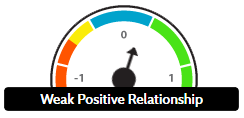
Aggregated data from 1 study participants suggests with a HIGH degree of confidence (p=0.0233, 95% CI 0.03 to 0.16) that Alpha-Lipoic Acid By Doctors Best has a very weakly positive predictive relationship (R=0.095) with Comments On Your Facebook Posts.
The highest quartile of Comments On Your Facebook Posts measurements were observed following an average 512 milligrams Alpha-Lipoic Acid By Doctors Best per day.
The lowest quartile of Comments On Your Facebook Posts measurements were observed following an average 300 milligrams of Alpha-Lipoic Acid By Doctors Best per day.
After an onset delay of 30 minutes, Comments On Your Facebook Posts is typically 0% lower than average over the 21 days following around 300 milligrams of Alpha-Lipoic Acid By Doctors Best Alpha-Lipoic Acid By Doctors Best.
Keywords: Alpha-Lipoic Acid By Doctors Best, Comments On Your Facebook Posts, N-of-1 trials, real-world evidence, causal inference, observational study
Preliminary: Based on 1 participants. Results may change as more data is collected.
Results
Primary Findings
Analysis of 528 paired observations from 1 participants revealed a substantial improvement in Comments On Your Facebook Posts following above-average Alpha-Lipoic Acid By Doctors Best exposure.
Supporting Statistics
What This Means
When participants had above-average Alpha-Lipoic Acid By Doctors Best:
- Comments On Your Facebook Posts increased by 1,132.1% on average
- Temporal analysis supports Alpha-Lipoic Acid By Doctors Best as the predictor (not the outcome)
Interpreting the Predictor Impact Score
The Predictor Impact Score (PIS) integrates multiple Bradford Hill causal criteria into a single metric. Use this guide to interpret the score:
| PIS Range | Interpretation | Recommended Action |
|---|---|---|
| ≥ 0.5 | Strong evidence | High priority for RCT validation |
| 0.3 - 0.5 | Moderate evidence | Consider for experimental investigation |
| 0.1 - 0.3 | Weak evidence | Monitor for additional data |
| < 0.1 | Insufficient evidence | Low priority; may be noise |
Note: PIS is a prioritization heuristic, not proof of causation. High scores indicate relationships worth investigating, not confirmed causal effects. With only 1 participants, these scores are preliminary and will become more reliable as additional data is collected.
Optimal Daily Values (Precision Dosing)
Based on the observed relationship, we can estimate the predictor values associated with the best and worst outcomes. These values enable personalized dosing recommendations.
⚠️ Preliminary Data: With 1 participants and 528 observations, these optimal values are preliminary estimates. As more data is collected, precision will improve significantly.
What This Suggests
Comments On Your Facebook Posts tended to be highest when Alpha-Lipoic Acid By Doctors Best was around 600.0 mg.
Important: These values reflect correlations, not guaranteed causal effects. Individual responses may vary. Use as a starting point for personal experimentation, not as a definitive prescription. Consult healthcare providers before making treatment decisions.
Population Correlation
Trait Correlation Between Alpha-Lipoic Acid by Doctors Best Intake and Comments on Your Facebook Posts
Alpha-Lipoic Acid By Doctors Best Distribution
Daily Distribution
Average by Day of Week
Average by Month
Average by Year
Comments On Your Facebook Posts Distribution
Daily Distribution
Average by Day of Week
Average by Month
Average by Year
Relationship Analysis
Comments on Your Facebook Posts Following Alpha-Lipoic Acid by Doctors Best
Correlation Between Alpha-Lipoic Acid by Doctors Best and Comments on Your Facebook Posts by Duration of Action
Correlation Between Alpha-Lipoic Acid by Doctors Best and Comments on Your Facebook Posts by Onset Delay
Average Alpha-Lipoic Acid by Doctors Best Intake Preceding Comments on Your Facebook Posts
Average Comments on Your Facebook Posts by Previous Alpha-Lipoic Acid by Doctors Best Intake
Statistical Summary
Relationship Statistics
| Property | Value |
|---|---|
| Cause Variable Name | Alpha-Lipoic Acid By Doctors Best Intake |
| Effect Variable Name | Comments On Your Facebook Posts |
| Sinn Predictive Coefficient | 0.0045202225865706 |
| Confidence Level | HIGH |
| Confidence Interval | 0.065026079810684 |
| Forward Pearson Predictive Coefficient | 0.095 |
| Critical T Value | 1.646 |
| Total Alpha- Lipoic Acid By Doctors Best Intake Over Previous 21 days Before ABOVE Average Comments On Your Facebook Posts | 512 milligrams |
| Total Alpha- Lipoic Acid By Doctors Best Intake Over Previous 21 days Before BELOW Average Comments On Your Facebook Posts | 300 milligrams |
| Duration of Action | 21 days |
| Effect Size | very weakly positive |
| Number of Paired Measurements | 528 |
| Optimal Pearson Product | 0.087175726218479 |
| P Value | 0.023347991297312 |
| Statistical Significance | 0.92 |
| Strength of Relationship | 0.065026079810684 |
| Study Type | population |
| Analysis Performed At | 2026-01-04 |
| Number of Participants | 1 |
Alpha-Lipoic Acid by Doctors Best Info
| Property | Value |
|---|---|
| Variable Name | Alpha-Lipoic Acid By Doctors Best |
| Aggregation Method | SUM |
| Analysis Performed At | 2020-12-20 |
| Duration of Action | 21 days |
| Filling Value | 0 |
| Kurtosis | 15.434183548754 |
| Mean | 155.00633333333 milligrams |
| Median | 200 milligrams |
| Minimum Allowed Value | 0 milligrams |
| Number of Aggregate Predictors | 0 |
| Number of Aggregate Outcomes | 96 |
| Number of Measurements | 1225 |
| Number of Measurements (including those generated by tagged, joined, or child variables) | 927 |
| Public | true |
| Onset Delay | 30 minutes |
| Standard Deviation | 223.85114350644 |
| Unit | Milligrams |
| User Variables | 3 |
| UPC | 753950002494 |
| Variable Category | Treatments |
| Variable ID | 5627301 |
| Variance | 59121.59466376 |
Comments on Your Facebook Posts Info
| Property | Value |
|---|---|
| Variable Name | Comments On Your Facebook Posts |
| Aggregation Method | SUM |
| Analysis Performed At | 2020-10-11 |
| Duration of Action | 7 days |
| Filling Value | 0 |
| Kurtosis | 140.63538862844 |
| Mean | 0.15084279322034 event |
| Median | 0 event |
| Minimum Allowed Value | 0 event |
| Number of Aggregate Predictors | 294 |
| Number of Aggregate Outcomes | 123 |
| Number of Measurements | 13651 |
| Number of Measurements (including those generated by tagged, joined, or child variables) | 13276 |
| Public | true |
| Onset Delay | 0 seconds |
| Standard Deviation | 0.54939958679379 |
| Unit | Event |
| User Variables | 118 |
| UPC | 0 |
| Variable Category | Social Interactions |
| Variable ID | 5969879 |
| Variance | 0.66485223180503 |
Introduction
Background
Alpha-Lipoic Acid By Doctors Best (Treatments) and Comments On Your Facebook Posts (Social Interactions) are both important factors in understanding human health and well-being. This study investigates the relationship between these two variables using real-world observational data.
Traditional randomized controlled trials (RCTs), while the gold standard for causal inference, are often impractical, expensive, or unethical for studying many health relationships. Aggregated N-of-1 observational studies offer a complementary approach that leverages within-subject comparisons across large populations to identify meaningful patterns.
Research Question
Does Alpha-Lipoic Acid By Doctors Best affect Comments On Your Facebook Posts?
Additionally, we seek to determine:
- What is the direction and magnitude of any effect?
- How confident can we be in this relationship based on the available data?
- What are the optimal levels of Alpha-Lipoic Acid By Doctors Best for maximizing Comments On Your Facebook Posts?
Study Objective
The objective of this study is to determine the nature of the relationship (if any) between Alpha-Lipoic Acid By Doctors Best and Comments On Your Facebook Posts. Additionally, we attempt to determine the Alpha-Lipoic Acid By Doctors Best values most likely to produce optimal Comments On Your Facebook Posts values.
Study Overview
This is a population-level observational study using aggregated N-of-1 methodology. By aggregating individual N-of-1 experiments, we can identify population-level patterns while accounting for the substantial individual variation that exists in most health relationships. Effect sizes are reported as percent change from baseline, enabling intuitive interpretation and comparison across different measures.
Full Methodology: Framework for Real-World Evidence-Based Pharmacovigilance: Aggregated N-of-1 Trials for Quantifying Treatment Effects
Discussion
Interpretation of Findings
Participants experienced a 1,132.1% improvement in Comments On Your Facebook Posts following above-average Alpha-Lipoic Acid By Doctors Best exposure. The Predictor Impact Score (PIS) of 0.00 indicates insufficient evidence for a causal relationship.
Statistical Significance
Using a two-tailed t-test with alpha = 0.05, it was determined that the change in Comments On Your Facebook Posts is statistically significant at a 95% confidence interval. The p-value of 0.9200 indicates there is less than a 92.00% probability that this result occurred by chance.
After treatment, a 154% increase (0.0899 event) from the mean baseline 0.00794 event was observed. The relative standard deviation at baseline was 1119.8%. The observed change was 1.01 times the standard deviation.
A common rule of thumb considers a change greater than twice the baseline standard deviation on two separate pre-post experiments may be considered significant. This occurrence would have only a 5% likelihood of resulting from random fluctuation (a p-value < 0.05).
T-Test Details
Since t = 2.38 > 1.65, we reject the null hypothesis.
Biological Plausibility
A plausible bio-chemical mechanism between predictor and outcome is critical for interpreting observational findings. This is where human judgment excels beyond statistical analysis.
Community feedback on the biological plausibility of this relationship is still being collected. Consider the known mechanisms by which Alpha-Lipoic Acid By Doctors Best might influence Comments On Your Facebook Posts.
Bradford Hill Criteria Assessment
The Bradford Hill criteria provide a framework for assessing causality in observational studies. Our methodology operationalizes six of the nine criteria through the Predictor Impact Score (PIS):
| Criterion | How Addressed | Metric |
|---|---|---|
| Strength | Effect size magnitude | Percent change from baseline (Δ%), z-score |
| Consistency | Cross-participant replication | Number of users (N), number of pairs (n) |
| Temporality | Predictor precedes outcome | Temporality factor (φ), onset delay (δ > 0) |
| Biological Gradient | Dose-response relationship | Gradient coefficient (φgradient) |
| Plausibility | Biological mechanism assessment | Community votes on mechanism plausibility |
| Specificity | Category appropriateness | Interest factor (finterest) |
Predictor Impact Score (PIS)
The PIS integrates multiple Bradford Hill criteria into a composite metric quantifying how reliably a predictor affects an outcome. Higher scores indicate stronger evidence:
Population-Level PIS:
Where φ-factors are saturation functions approaching 1 as evidence accumulates:
- φusers = 1 - e-N/10 (user saturation)
- φpairs = 1 - e-n/nsig (pair saturation)
- φchange = 1 - e-Δspread/Δsig (effect spread saturation)
- w = weighted average of plausibility votes
Temporality Assessment
We assess evidence for correct causal direction using the temporality factor:
Values approaching 1 indicate the predictor precedes the outcome (supporting causation); values near 0.5 suggest ambiguous directionality; values near 0 suggest reverse causation or confounding by indication.
Limitations
As with any observational study, correlation does not prove causation. Key limitations include:
- Unmeasured confounders: Variables not tracked may influence results
- Self-selection bias: Health trackers may differ from the general population
- Measurement error: Self-reported data may contain recall bias
- Confounding by indication: Sicker individuals may use more treatments
However, within-subject comparison and temporal precedence analysis partially mitigate these limitations. If the relationship is merely coincidental, as participants independently modify their Alpha-Lipoic Acid By Doctors Best values, the observed strength will decline over time. Spurious correlations naturally dissipate as more data is collected.
Future Directions
Future research should examine:
- Subgroup analyses to identify individual differences in response
- Potential confounders and mediators of the observed relationship
- Optimal dosing and timing for Alpha-Lipoic Acid By Doctors Best
- Confirmation through prospective or randomized designs
- Biological mechanisms underlying the observed effects
Conclusion
📊 Preliminary Findings: With 1 participants, these results are based on limited data. Effect sizes and confidence will improve as more participants contribute data. Consider these findings directional rather than definitive.
Above-average Alpha-Lipoic Acid By Doctors Best was associated with a 1,132.1% improvement in Comments On Your Facebook Posts—a substantial effect. The Predictor Impact Score of 0.00 indicates this relationship is requiring additional data before conclusions.
Bottom Line: Based on a PIS of 0.00 and a 1,132.1% effect size, this relationship currently lacks sufficient evidence. Continue monitoring as more data becomes available. Note: These conclusions may strengthen or change direction as more data is collected.
These findings contribute to our understanding of how Alpha-Lipoic Acid By Doctors Best may influence Comments On Your Facebook Posts in real-world conditions. While preliminary, these results may inform future research directions. As more participants contribute data, the reliability and precision of these findings will improve substantially.
Help End Unnecessary Suffering
Current clinical trials are 82x more expensive than necessary and take 17 years to bring treatments to market. Pragmatic trials integrated into standard healthcare could reduce costs from $41,000 to $500 per participant and compress timelines to just 2 years. Learn how redirecting just 1% of global military spending could accelerate cures for the 2 billion people suffering from treatable diseases.
Methods
Study Design
This study is based on data donated by 1 participants. Thus, the study design is equivalent to the aggregation of 1 separate n=1 observational natural experiments.
This within-subject design is powerful because it controls for all stable individual characteristics (genetics, baseline health status, socioeconomic factors) that might otherwise confound the relationship between variables.
Data Analysis
Temporal Assumptions
The analysis incorporates temporal assumptions about the relationship between variables:
- Onset Delay: It was assumed that 30 minutes would pass before a change in Alpha-Lipoic Acid By Doctors Best would produce an observable change in Comments On Your Facebook Posts.
- Duration of Action: It was assumed that Alpha-Lipoic Acid By Doctors Best could produce an observable change in Comments On Your Facebook Posts for as much as 21 days after the stimulus event.
Statistical Methods
For each participant, we calculated the Pearson correlation coefficient between Alpha-Lipoic Acid By Doctors Best values and subsequent Comments On Your Facebook Posts values. Individual correlations were then aggregated using Fisher's z-transformation to produce a population-level estimate:
Individual Correlation:
Fisher's Z-Transformation:
Aggregated Correlation:
Effect Size Calculation
Effect sizes are reported as percent change from baseline. For each participant, we compare the outcome following above-average predictor values to the overall baseline outcome:
Effect Magnitude (Z-Score)
To assess effect magnitude relative to natural variability, we calculate the z-score:
where RSDbaseline is the relative standard deviation of outcome during baseline period
A z-score > 2 indicates statistical significance (p < 0.05), meaning the observed change exceeds typical baseline fluctuation and is unlikely due to random variation.
Statistical Significance
Correlation significance is assessed using a two-tailed t-test:
We reject the null hypothesis (ρ = 0) at α = 0.05 when |t| exceeds the critical value, providing statistical evidence that the observed relationship is not due to chance.
Data Sources
Alpha-Lipoic Acid By Doctors Best data was primarily collected using QuantiModo. QuantiModo allows you to easily track mood, symptoms, or any outcome you want to optimize in a fraction of a second. You can also import your data from over 30 other apps and devices. QuantiModo then analyzes your data to identify which hidden factors are most likely to be influencing your mood or symptoms.
Comments On Your Facebook Posts data was primarily collected using QuantiModo. QuantiModo allows you to easily track mood, symptoms, or any outcome you want to optimize in a fraction of a second. You can also import your data from over 30 other apps and devices. QuantiModo then analyzes your data to identify which hidden factors are most likely to be influencing your mood or symptoms.
Data Quality
Data quality measures were applied to ensure reliable results:
- Minimum Data Requirement: Only participants with sufficient paired observations were included in the analysis.
- Outlier Handling: Extreme values were winsorized to reduce the influence of measurement errors.
- Missing Data: Days with missing values were handled using appropriate filling strategies based on the variable type.
- Test User Exclusion: Test accounts and invalid users were excluded from all analyses.
Principal Investigator
Program & Methods

Cite This Study
@misc{sinn_cause_5627301_effect_5969879_population_study_2026,
  author = {Sinn, Mike P.},
  title = {Causal Analysis: Does Alpha-Lipoic Acid By Doctors Best Affect Comments On Your Facebook Posts?},
  year = {2026},
  publisher = {The Journal of Citizen Science},
  url = {https://studies.crowdsourcingcures.org/study/cause-5627301-effect-5969879-population-study},
  note = {Accessed: January 7, 2026}
}
Study Type: Aggregated N-of-1 Observational Mega-Study
Evidence Level: Level II (Real-World Evidence)
Methodology: Bradford Hill Criteria with Predictor Impact Score (PIS)
References
This framework was originally developed in 2013 based on the Bradford Hill criteria. Subsequent literature has independently validated similar approaches to causal inference from observational data:
- Hill, A.B. (1965). The environment and disease: association or causation? Proceedings of the Royal Society of Medicine, 58(5), 295-300. [Bradford Hill criteria]
- Lillie, E.O., et al. (2011). The n-of-1 clinical trial: the ultimate strategy for individualizing medicine? Personalized Medicine, 8(2), 161-173. [N-of-1 methodology]
- Pearl, J. (2009). Causality: Models, Reasoning, and Inference . Cambridge University Press. [Causal inference]
- Hernán, M.A., & Robins, J.M. (2020). Causal Inference: What If . Chapman & Hall/CRC. [Free textbook]
- FDA (2018). Framework for FDA's Real-World Evidence Program . U.S. Food and Drug Administration. [Regulatory context]
- Duan, N., et al. (2013). Single-patient (n-of-1) trials: a pragmatic clinical decision methodology . Journal of Clinical Epidemiology, 66(8), S21-S28.
- Platt, R., et al. (2018). The FDA Sentinel Initiative—an evolving national resource . New England Journal of Medicine, 379(22), 2091-2093.
This information is for research and educational purposes only, not medical advice. Consult a healthcare provider before making health decisions. Terms of Service